
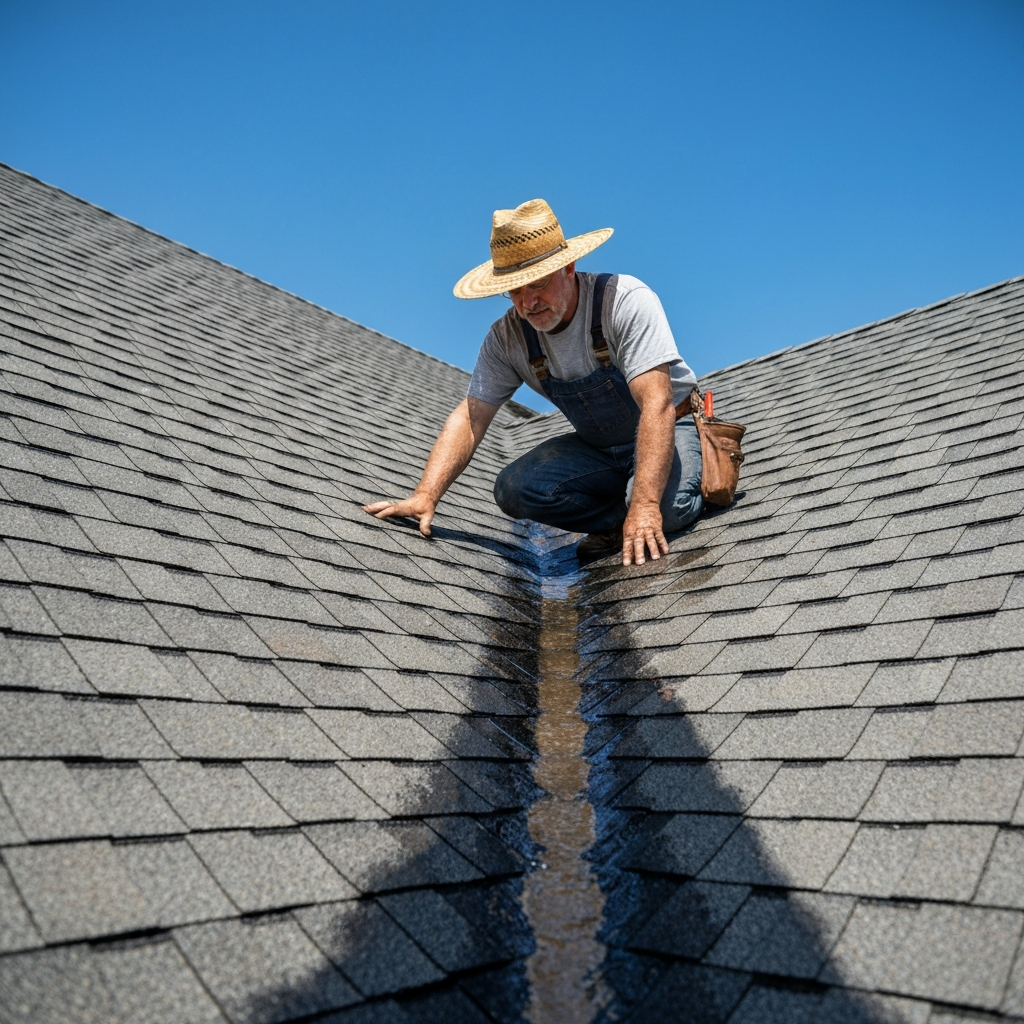
Don't Panic. Act Quickly.
Discovering water dripping from your ceiling during a heavy Middle Tennessee rainstorm is one of the most stressful experiences a homeowner can face. The sound of water hitting the drywall, the spreading brown stain, and the fear of structural damage can easily cause panic. When a sudden storm hits, the last thing you want is a compromised roof letting water pour into your living space.
However, taking immediate, decisive action can save you thousands of dollars in interior water damage and prevent catastrophic drywall collapse. At Worth Roofing Company, we handle emergency leak calls across Franklin, Bellevue, and Fairview every single week. We have seen firsthand how quick thinking can minimize the destruction. We created this comprehensive guide to tell you exactly what to do in the first 60 minutes of discovering a leak to protect your home, your family, and your wallet.
Safety First: The Golden Rule
NEVER climb onto a wet roof during a storm. No amount of water damage is worth risking a fatal fall. Wet asphalt shingles are as slick as ice, and steep pitches become incredibly dangerous in the rain. Keep your mitigation efforts strictly inside the house until the storm passes, or call a professional with proper safety harnesses to perform emergency tarping.
Step 1: Clear the Impact Zone
The moment you spot a leak, your first priority is protecting your belongings. Water will ruin electronics, stain upholstery, and warp hardwood furniture very quickly. Depending on the severity of the leak, water can spread rapidly across the floor.
- Relocate Valuables: Move all furniture, rugs, electronics, and sentimental items away from the drip zone immediately.
- Cover Heavy Items: If a heavy piece of furniture (like a solid wood dining table or a piano) cannot be easily moved, cover it tightly with heavy-duty plastic sheeting, a waterproof tarp, or even heavy trash bags cut open.
- Prevent Electrical Hazards: Unplug any electronics, lamps, or appliances in the immediate vicinity to prevent electrical shorts and potential fire hazards. If water is dripping near a light fixture or ceiling fan, go to your breaker box and turn off the power to that room.
Step 2: Contain the Water
Once your belongings are safe, you need to catch the water before it ruins your flooring. Hardwood floors will warp and buckle, and carpets will absorb water fast, becoming breeding grounds for mold. Both are very expensive to replace.
- Grab a Container: Place a large bucket, a clean trash can, or a plastic storage bin directly under the leak.
- The Towel Trick: Place an old towel or a thick t-shirt at the bottom of the bucket. This absorbs the impact of the dripping water, stopping the annoying "plink, plink, plink" sound and preventing dirty water from splashing out onto your clean floor.
- Create a Barrier: Keep a mop and extra dry towels nearby to handle any splashing or overflow. If the leak is severe, you may need to empty the bucket frequently.
Step 3: Relieve the Water Pressure (Crucial Step)
If you look up and see a large, sagging bulge in your ceiling, water is actively pooling behind the drywall. Drywall acts exactly like a sponge—it absorbs water until it becomes too saturated and heavy. When it reaches its breaking point, the entire ceiling panel will collapse, sending gallons of dirty water, wet insulation, and heavy drywall chunks crashing into your living room.
You must relieve this pressure immediately to prevent a ceiling collapse.
- Take a screwdriver, an awl, or a stiff piece of wire.
- Position your bucket directly underneath the lowest point of the sagging bulge.
- Carefully poke a small hole directly in the center of the bulge.
This often seems counterintuitive to homeowners—why put a hole in your own ceiling? But this controlled puncture allows the water to drain cleanly into your bucket. Patching a half-inch hole in drywall costs just a few dollars and takes minutes; replacing a collapsed ceiling, re-insulating the attic, and fixing the ruined flooring beneath it costs thousands. Do not skip this step if your ceiling is visibly bulging.
Step 4: Check the Attic (If Safe to Do So)
If the leak is active but the storm has calmed down, and you have safe, well-lit access to your attic, you can attempt to locate the source of the leak. Finding the source helps your roofing contractor diagnose the problem faster when they arrive.
Remember: Water travels. The spot where water is dripping through your ceiling is rarely the exact spot where the roof has failed. Water enters through the compromised roof deck, runs down the sloped rafters, and drips onto the ceiling insulation several feet away from the actual entry point.
- Take a bright, high-powered flashlight into the attic.
- Look for water stains, black mold spots, or active dripping along the wooden rafters and OSB decking.
- Pay special attention to areas around roof penetrations: chimney flashing, plumbing vent pipes, skylights, and HVAC exhaust vents. These are the most common points of failure on any residential roof.
- Safety Warning: Do not step on the drywall ceiling! Only walk securely on the wooden joists. Stepping on the drywall will result in you falling through the ceiling into the room below, causing severe injury.
Step 5: Document Everything for Insurance
If the leak was caused by storm damage—such as high winds tearing off shingles, hail fracturing the matting, or a flying tree branch puncturing the decking—you will likely be filing a homeowners insurance claim. Your insurance adjuster will need undeniable evidence to prove the extent of the damage and confirm it was a sudden weather event.
- Take Photos and Videos: Capture clear footage of the active leak inside the house while it is happening.
- Document the Damage: Photograph the ceiling damage, the water accumulating in the buckets, and any damaged furniture, rugs, or flooring.
- Attic Evidence: If you go into the attic, photograph the wet insulation and the dark water stains on the underside of the roof deck.
- Save Everything: Do not throw away any ruined items until the insurance adjuster has seen them in person or given you explicit written permission to dispose of them. Keep a log of the date and time the storm occurred.
Common Causes of Roof Leaks During Heavy Rain
Understanding why your roof is leaking can help you communicate better with your roofing contractor. Here are the most frequent culprits we find in Middle Tennessee:
- Failed Pipe Boots: The rubber boots surrounding your plumbing vent pipes dry out, crack, and split under the harsh Tennessee sun. This leaves a direct opening for rain to run down the pipe into your attic.
- Compromised Flashing: Flashing is the thin metal installed around chimneys, skylights, and roof valleys to direct water away from critical seams. If flashing rusts, bends, or the sealant degrades, water will easily bypass the shingles.
- Wind-Driven Rain: During severe storms, high winds can push rain horizontally, driving it up and under your shingles or through your ridge vents. This can cause leaks even if your shingles are intact.
- Missing or Damaged Shingles: Older asphalt shingles become brittle and lose their adhesion. Strong winds can lift or blow them off completely, exposing the vulnerable underlayment beneath.
The Hidden Dangers of Ignoring a Minor Roof Leak
A common mistake homeowners make is assuming that a small, intermittent leak isn't a big deal. They place a bucket in the attic and forget about it until the next heavy rain. However, even the smallest amount of water intrusion can cause severe, cascading damage over time.
- Mold and Mildew Growth: According to FEMA and the EPA, mold thrives in dark, damp environments like attics and can begin growing within 48 hours of a leak. Once mold spreads through your HVAC system, it becomes a serious health hazard for your family and requires expensive professional remediation.
- Structural Wood Rot: Constant moisture causes the wooden roof decking and structural rafters to rot and decay. Over time, this compromises the structural integrity of your entire roof, turning a simple repair into a massive reconstruction project.
- Insulation Damage: When fiberglass or cellulose insulation gets wet, it clumps together and loses its thermal resistance (R-value), according to the Department of Energy. This leads to skyrocketing heating and cooling bills.
- Fire Hazards: If water seeps into your walls and contacts electrical wiring or junction boxes, it can cause short circuits and potentially spark an electrical fire.
Need Emergency Service Now?
If you cannot contain the leak or the storm has caused severe structural damage, call Worth Roofing Company immediately. We offer rapid-response emergency tarping and professional roof repair services to stabilize your home and prevent further destruction.
Call (615) 952-1010Step 6: Call a Professional Roofing Contractor
Once the interior situation is stabilized and the immediate danger has passed, you need to address the root cause on the roof. Do not rely on a neighborhood handyman or a out-of-state "storm chaser" who knocks on your door offering a quick patch job with roofing cement. These temporary fixes rarely hold up to the next storm and can actually cause more damage by trapping water underneath the shingles. If water is actively entering your home, Worth Roofing Company provides emergency roofing services with rapid-response tarping crews to secure your roof immediately.
Call a licensed, insured, and established local roofing contractor. At Worth Roofing Company, we will perform a comprehensive, detailed roof inspection, identify the exact point of failure, and provide a permanent repair solution. If the damage is extensive enough to warrant an insurance claim, we will provide the exact photographic documentation and professional estimates your adjuster needs to process the claim quickly and fairly.

Reviewed & Written By
Terry
Owner, Worth Roofing Company
Terry brings over four decades of hands-on roofing expertise to Middle Tennessee homeowners. As the owner of Worth Roofing Company, Terry is passionate about educating the community on proper roof maintenance, storm damage mitigation, and navigating the insurance claims process to ensure every home is protected. He has personally overseen thousands of residential roof repairs, replacements, and emergency responses across Franklin, Fairview, Kingston Springs, Bellevue, Burns, Dickson, and Pegram.
Frequently Asked Questions About Roof Leaks
Related Emergency Roofing Resources
Sources & References
This article is supported by the following authoritative sources. We encourage you to verify information directly from these references.