

Need Emergency Roof Tarping Now?
If your roof has been damaged by wind, hail, or fallen trees, don't wait. Temporary tarping can help reduce additional water damage while permanent repairs are scheduled.
Quick Answer: Emergency Roof Tarping
Emergency roof tarping is a critical, temporary measure used to seal a damaged roof after severe weather, fallen trees, or sudden leaks. It acts as a waterproof barrier to prevent devastating secondary interior damage, such as ruined drywall, electrical hazards, and mold growth, until permanent repairs can be made.
- When to call: Immediately after structural damage, high wind blow-offs, or active leaks.
- Insurance: Most homeowners policies require mitigation and will cover the cost.
- Duration: Provides temporary protection while permanent repairs are arranged; duration depends on weather and damage.
- DIY risk: Highly dangerous; always rely on licensed roofing professionals.
What Is Emergency Roof Tarping?
Emergency roof tarping is the rapid deployment of heavy-duty, water-resistant materials over a compromised section of a roof. When severe weather strikes Middle Tennessee, it can leave homes vulnerable to the elements in an instant. Tarping acts as a critical, temporary bandage that seals the building envelope and prevents further damage.
It is not a permanent fix. Instead, it is a mitigation strategy designed to seal the building envelope, preventing rain, debris, and pests from entering the home until a thorough inspection can be completed and permanent repairs can be scheduled. At Worth Roofing Company, we respond to emergency tarping calls across Franklin, Bellevue, Kingston Springs, and the surrounding Middle Tennessee area every week.
A properly installed roof tarp utilizes specialized, UV-resistant woven polyethylene. Unlike the standard blue tarps you might find at a local hardware store, professional-grade tarps are designed to withstand high winds, heavy rain, and intense sun exposure for extended periods. The installation process involves securing the tarp with wooden furring strips and specialized fasteners that anchor directly into the roof deck, ensuring a watertight seal that won't blow away in the next storm.
When Is Emergency Roof Tarping Necessary?
Not every roofing issue requires an emergency tarp. A single missing shingle on a dry week can often wait for a standard repair appointment. However, certain situations demand immediate intervention to protect your home's structural integrity and interior contents:
- Fallen Trees or Large BranchesImpact damage from falling timber can crush trusses, puncture the roof deck, and create massive openings that cannot wait for standard scheduling. This is especially common in heavily wooded areas like Fairview and Pegram during severe thunderstorms or ice events.
- Severe Wind DamageHigh winds, straight-line winds, and tornadic activity can tear off large swathes of shingles, exposing the vulnerable underlayment or bare wood deck beneath. Without the protective shingle layer, the underlayment will quickly degrade and allow water intrusion.
- Large Hail ImpactsWhile pea-sized hail usually causes minor bruising, extreme hail (golf ball-sized or larger) can shatter skylights, completely fracture roofing materials, and create immediate openings for water to enter. We frequently see this type of damage in Dickson and Burns after spring storm systems.
- Active, Uncontrollable LeaksIf water is actively pouring into your living space during a storm, immediate exterior tarping is necessary once the weather clears enough for safe access. Catching water in buckets is only a stopgap; the source of the leak must be covered externally.
- Fire DamageIf a localized fire burns through a section of the roof, or if firefighters had to cut ventilation holes, tarping protects the remaining structure from weather damage while comprehensive repairs are planned and executed.
Why Immediate Roof Tarping Matters
The consequences of leaving a damaged roof exposed are severe and escalate rapidly. What starts as a localized roofing problem can quickly become a whole-house disaster. The following risks are real, costly, and entirely preventable with prompt tarping.
1. Secondary Water Damage
Water is relentless. Once it breaches the roof deck, it saturates insulation (rendering it useless and heavy), travels along rafters, pools on drywall ceilings until they collapse, and ruins flooring and furniture below. A $500 roof repair can easily turn into a $15,000 interior restoration project if water flows freely for even a few hours.
2. Mitigating Mold Growth
In Tennessee's humid climate, mold can begin growing on damp organic materials like wood framing and drywall paper within 24 to 48 hours. Tarping cuts off the moisture supply before mold spores have a chance to proliferate, preventing expensive remediation.
3. Avoiding Electrical Hazards
Water traveling through wall cavities often encounters electrical wiring, outlets, and junction boxes. This creates immediate fire hazards and serious risks of electrocution. If water leaks near fixtures, turn off the power and call for emergency tarping.
4. Insurance Requirements
Nearly all homeowners insurance policies include a strict clause requiring the policyholder to "mitigate further damage" after a loss. Promptly hiring a professional to tarp the roof proves to the insurance adjuster that you took immediate, responsible action.
Tennessee Storm Damage Facts
- Wind and hail account for over 30% of all residential property claims nationwide.
- Middle Tennessee experiences an average of 50-60 thunderstorm days per year, many producing damaging winds and hail.
- Roof damage is consistently one of the most common homeowner insurance claim categories in Williamson, Davidson, and Cheatham counties.
What Should You Do Immediately After Storm Damage?
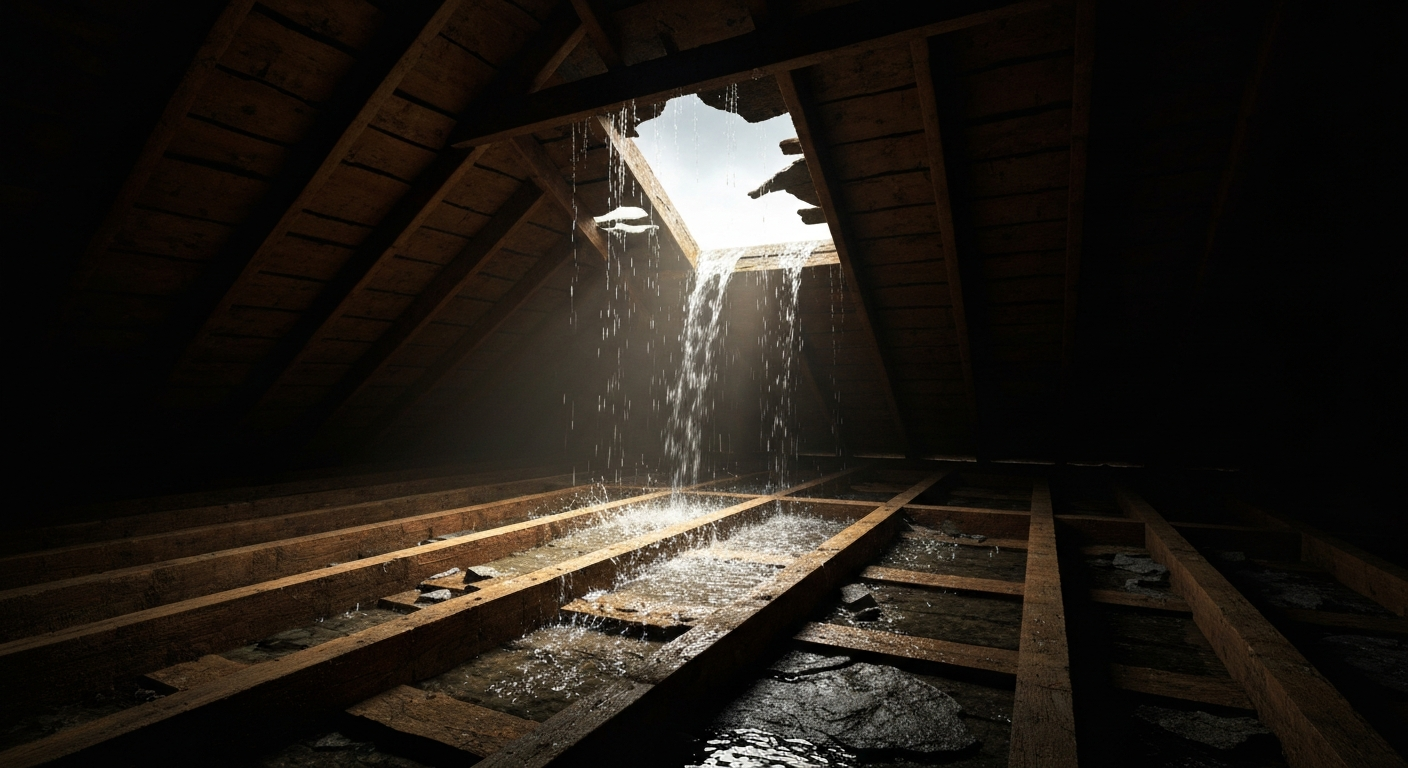
If your home sustains severe roof damage, the actions you take in the first few hours are critical. Follow this step-by-step checklist to protect your safety, minimize damage, and set up a successful insurance claim:
- 1Ensure Personal Safety First:
Evacuate the immediate area if the structural integrity of the ceiling is compromised (e.g., sagging drywall, loud creaking noises). Do not touch wet electrical fixtures or wade through standing water if power is still on.
- 2Document the Damage (From the Ground):
Take clear, high-resolution photos and videos of the damage from the exterior of your home and the interior leaks. Do not climb onto the roof yourself. This documentation is vital for your insurance claim.
- 3Protect Interior Belongings:
Move furniture, electronics, rugs, and valuables away from active leak areas. Place buckets, plastic bins, or heavy-duty trash cans to catch dripping water. Lay down towels or plastic sheeting to protect flooring.
- 4Call an Emergency Roofing Contractor:
Contact a reputable, local company to dispatch an emergency tarping crew. Ensure they are licensed, insured, and experienced in storm damage mitigation. For urgent situations across Middle Tennessee, Worth Roofing Company provides emergency roof repair with rapid-response tarping crews available to secure your home.
- 5Contact Your Insurance Company:
Report the initial claim to your insurance agent or claims department. Note the date, time, and cause of damage. Inform them clearly that you are arranging for emergency tarping to mitigate further loss, as required by your policy.
Can You Install a Roof Tarp Yourself?
While hardware stores sell blue tarps and roofing nails, attempting to tarp a roof yourself is highly discouraged by safety experts, insurance companies, and roofing professionals for several critical reasons:
- Extreme Fall Risk
Roofs are inherently dangerous under perfect conditions. After a storm, they are often wet, covered in slippery debris (leaves, branches, loose granules), and structurally compromised. A fall from even a single-story roof can be fatal or cause life-altering injuries.
- Improper Installation Methods
Simply throwing a tarp over a hole and weighing it down with bricks, sandbags, or tires will not withstand the next gust of wind. Professionals use furring strips to mechanically fasten the tarp flat against the roof deck, creating a tensioned seal that prevents wind uplift.
- Furthering the Damage
Driving nails in the wrong places can cause unnecessary damage to healthy sections of the roof, increasing eventual repair costs. If a homeowner improperly nails a tarp into pristine shingles, the insurance company will not pay to replace those newly damaged shingles.
- Hidden Structural Dangers
Professionals know how to identify compromised decking, rotted trusses, or weakened structural supports that might collapse under a person's weight before stepping on them.
The Professional Verdict: Unless it is a small, easily accessible shed roof with a very low pitch, always leave emergency tarping to licensed, fully insured roofing professionals who have the proper safety harnesses, equipment, and training.
Safety Considerations During a Roofing Emergency
The chaotic aftermath of a severe storm in Middle Tennessee is not the time to take unnecessary risks. When trees are down, power lines are snapped, and roofs are compromised, safety must be the absolute priority.
- Downed Power LinesTreat every downed wire as live and lethal. Do not approach your home if power lines are resting on the roof, wrapped in fallen trees, or touching the ground near your property. Call the utility company immediately.
- Structural InstabilityA roof that has sustained massive impact damage from a tree may have shattered trusses or compromised load-bearing walls. Entering the home or standing underneath the damaged section could result in a catastrophic collapse.
- Hidden Slipping HazardsEven a seemingly dry roof can be incredibly slick after a storm due to loose granules stripped from the shingles, wet leaves, pine needles, or microscopic algae. Professional roofers wear specialized footwear and use OSHA-compliant fall protection systems (harnesses, lanyards, and roof anchors) to mitigate these risks.
How Professionals Install Emergency Roof Tarps
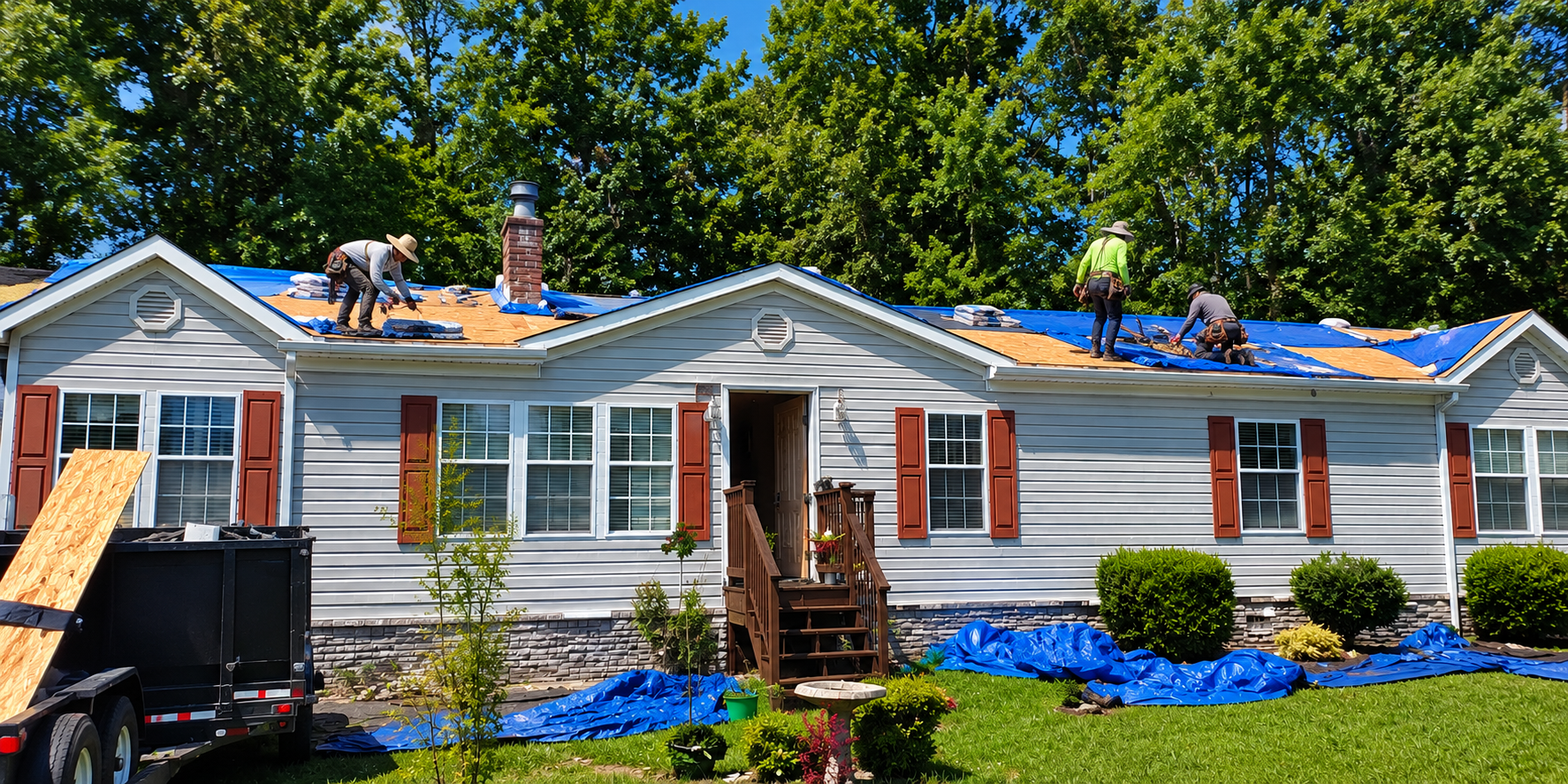
A professional tarp installation is a structured, meticulous process designed to withstand weather for several weeks or even months. Here is what a proper installation by Worth Roofing Company looks like:
- 1Comprehensive Safety Assessment:
The crew evaluates the structural integrity of the roof from the ground and via ladder before stepping foot on the deck. Safety harnesses and anchors are utilized on steep pitches.
- 2Debris Clearing:
Branches, shattered shingles, twisted metal, and loose debris are carefully cleared from the damaged area to ensure the tarp sits flat against the decking.
- 3Tarp Sizing and Positioning:
A heavy-duty, UV-resistant woven polyethylene tarp is selected. It must be large enough to extend a minimum of three to four feet beyond the damaged area in all directions. Crucially, the top edge of the tarp must drape over the roof peak (the ridge) to prevent water from running under the top edge.
- 4Securing the Perimeter:
The tarp is pulled taut to eliminate wrinkles where water could pool. Wooden furring strips (usually 1x2 or 2x4 boards) are wrapped in the edges of the tarp and screwed or nailed directly through the shingles into the solid roof decking. This creates a watertight seal and prevents wind from getting under the tarp.
- 5Vertical Battens:
For larger spans, additional furring strips are often run vertically down the face of the tarp. This prevents the material from billowing, flapping, and eventually tearing in high winds.
- 6Final Inspection:
The crew ensures all fasteners are secure, the tarp is tight, and no entry points for water remain.
How Long Does an Emergency Roof Tarp Last?
A professionally installed emergency tarp can provide temporary protection while permanent repairs and insurance claim decisions are being arranged. The exact duration depends on weather conditions and the extent of the damage.
However, it is vital to remember that tarps are strictly a temporary measure. They are susceptible to UV degradation from the intense Tennessee sun, which breaks down the plastic fibers over time, making them brittle and prone to tearing. They can also be weakened by subsequent severe storms, heavy snow, or high winds.
The goal should always be to transition from a temporary tarp to a permanent roof repair or roof replacement as quickly as the insurance claims process and your contractor's scheduling allow. Leaving a tarp on for six months is a recipe for eventual failure and renewed water damage.
Does Homeowners Insurance Cover Emergency Roof Tarping?
In the vast majority of cases, yes. Because homeowners insurance policies explicitly mandate that policyholders take reasonable and necessary steps to prevent further damage after a covered peril (like a windstorm, hail event, or fallen tree), the cost of emergency tarping is usually fully covered.
Typically, the emergency mitigation cost is absorbed into the total claim payout or applied toward your deductible. For example, if your deductible is $1,000 and the tarping costs $600, you will only have $400 left to pay out-of-pocket toward your deductible when the permanent roof replacement occurs.
Always retain the invoice and request that your roofing contractor take detailed photos of the damage before the tarp goes on, during the installation, and after completion. These photos serve as undeniable proof for your insurance adjuster. For more details on navigating the complexities of claims, read our comprehensive Insurance Claims Guide.
How Much Does Emergency Roof Tarping Cost?
Emergency roof tarping costs vary based on a number of factors specific to your home and situation. There is no single flat rate because each job is different. Your roofing contractor can provide an accurate estimate after assessing the damage in person. The factors that most commonly influence the final cost include:
- Roof Size and Tarp Coverage Needed: The larger the damaged area, the more material and labor is required. A small section over a garage is a very different job than covering an exposed section spanning two roof planes.
- Roof Pitch and Accessibility: Steep, multi-story roofs require more safety equipment, setup time, and specialized labor than low-pitch, single-story roofs.
- Emergency Response Timing: Tarping required late at night, on a weekend, or on a holiday during a widespread storm event may carry after-hours dispatch fees due to high demand and overtime labor costs.
- Extent of Debris Removal: If a large tree must be removed from the roof before tarping can even begin, tree removal costs will be separate and can add to the total.
- Local Labor Rates: Labor rates vary by market and contractor. Choosing a locally based, licensed roofing contractor in your area helps ensure fair and competitive pricing.
- Material Quality: Professional-grade woven polyethylene tarps, dimensional lumber for furring strips, and specialized fasteners carry higher material costs than basic hardware store alternatives — but they also hold up significantly longer.
What we can say with confidence is this: the cost of professional emergency tarping is almost always far less than the cost of the interior water damage it prevents. In most cases where storm damage is the cause, your homeowners insurance policy will reimburse the cost of reasonable emergency mitigation measures. Document everything, save your invoice, and discuss reimbursement with your adjuster.
Pricing Disclaimer: Cost estimates for emergency roof tarping vary significantly by job scope, location, roof complexity, and contractor. Worth Roofing Company provides free on-site assessments — contact us directly for an accurate estimate based on your specific situation.
How Worth Roofing Responds to Emergency Calls
When you call Worth Roofing Company for an emergency, we follow a strict, highly efficient dispatch protocol to secure your home as quickly as possible:
- 1Immediate Triage:
Our dispatch team assesses the severity of the situation over the phone, asking key questions about active leaks, structural damage, and safety hazards to prioritize the response.
- 2Rapid Dispatch:
We dispatch a specialized emergency response crew equipped with heavy-duty tarps, furring strips, safety gear, and the necessary tools to secure the property.
- 3On-Site Mitigation:
The crew safely accesses the roof, documents the damage with high-resolution photography for your insurance claim, and installs a secure, watertight tarp system.
- 4Follow-Up Planning:
Before leaving, we schedule a comprehensive daylight inspection to evaluate the full scope of the damage and begin the permanent restoration planning process.
When Is Roof Repair Enough?
Once the emergency has passed and the tarp is securely in place, the focus shifts to permanent restoration. Many homeowners wonder if they can simply repair the damaged section or if a full roof replacement is necessary.
A targeted roof repair is often sufficient if the damage is localized to a small area, the rest of the roof is in excellent condition, and the shingles are relatively new (typically under 10 years old). In these cases, we can carefully remove the damaged shingles, repair any compromised decking, and install new shingles that closely match the existing color.
When Is Roof Replacement Necessary?
Conversely, a full roof replacement is usually required if the roof has sustained widespread damage across multiple slopes, if the shingles are old and brittle (making repairs impossible without causing further damage), or if the underlying decking has suffered extensive structural failure.
If your roof was damaged by a severe storm, your insurance company may cover the cost of a full replacement if the damage is extensive enough. Our experienced inspectors will provide a detailed assessment and professional recommendation to help you make the best decision for your home.
What Happens After the Tarp Is Installed?
Tarping is only step one. Step two is permanent restoration. Once your home is secured and watertight, the real work begins.
First, Worth Roofing Company will conduct a comprehensive roof inspection. We will document the full extent of the storm damage that necessitated the tarp, as well as inspect the rest of the roof for less obvious issues like lifted shingles or hail bruising.
Next, we provide a detailed, line-item estimate and work alongside you and your insurance adjuster. We ensure the adjuster sees the photographic evidence of the original damage and understands the scope of work required to restore the home to its pre-loss condition. We help determine whether a targeted repair is sufficient or if a full roof replacement is required to guarantee the long-term integrity of the structure.
Never accept a tarp as a permanent solution, no matter what a door-to-door contractor or a well-meaning neighbor tells you. Temporary fixes are just that—temporary.
Need Emergency Roof Tarping in Franklin or Middle Tennessee?
If your roof has been damaged by wind, hail, fallen trees, or severe weather, Worth Roofing Company can inspect the damage, install temporary protection if appropriate, and help you plan the next steps for permanent repairs.
Frequently Asked Questions About Emergency Roof Tarping

Reviewed & Written By
Terry
Owner, Worth Roofing Company
Terry brings over four decades of hands-on roofing expertise to Middle Tennessee homeowners. As the owner of Worth Roofing Company, Terry is passionate about educating the community on proper roof maintenance, storm damage mitigation, and navigating the insurance claims process to ensure every home is protected. He has personally overseen thousands of residential roof repairs, replacements, and emergency responses across Franklin, Fairview, Kingston Springs, Bellevue, Burns, Dickson, and Pegram.
Related Emergency Roofing Resources
Sources & References
This article is supported by the following authoritative sources. We encourage you to verify information directly from these references.