
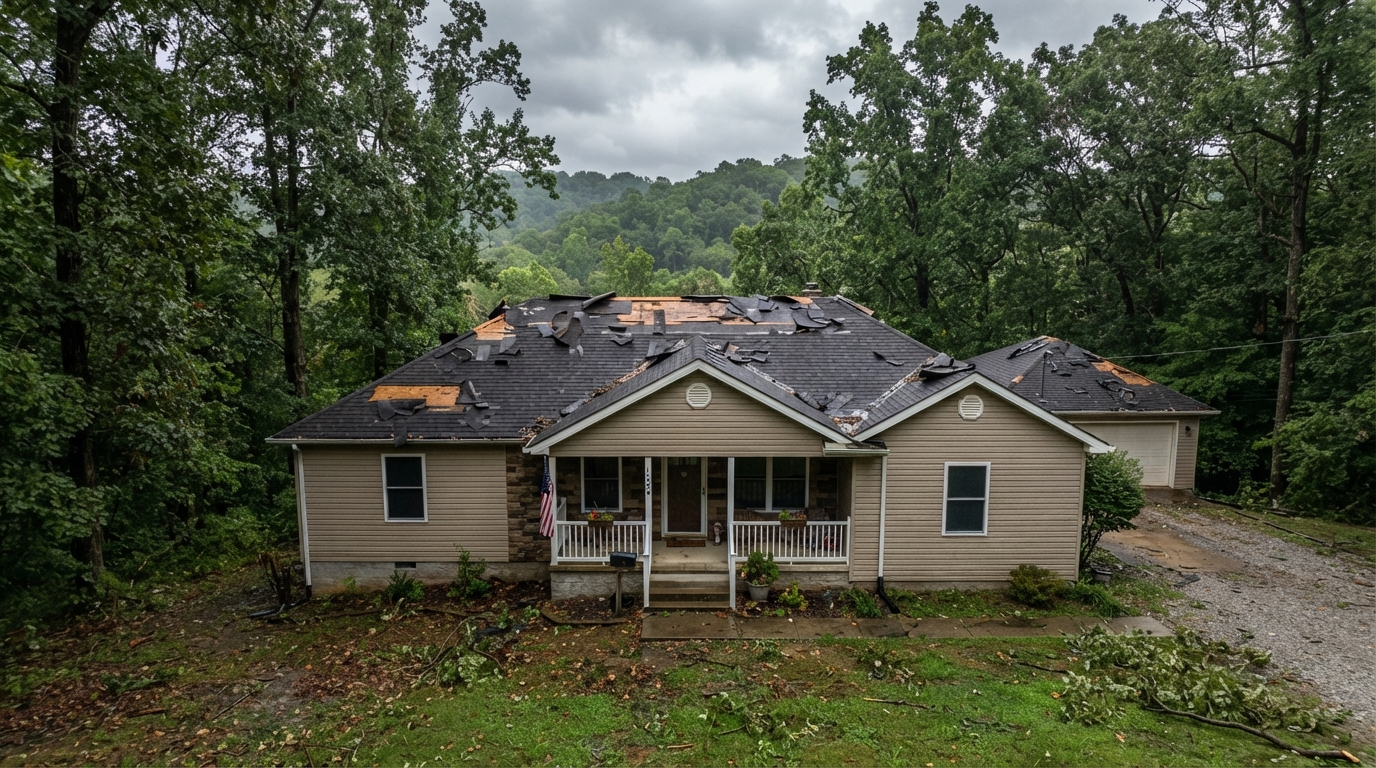
Storm Hit Kingston Springs? Get a Free Inspection
If your home was in the path of a recent storm, hidden roof damage may already be letting water into your attic. Our local experts provide free, comprehensive storm damage inspections for Kingston Springs homeowners.
Quick Answer: Kingston Springs Storm Damage
If your Kingston Springs, TN home was hit by a storm, do not call your insurance company first. Document everything with photos, walk your property for visible debris, and schedule a professional roof inspection. Because Kingston Springs sits along the Harpeth River surrounded by dense hardwood trees, wind damage, hail bruising, and tree-fall impact are the most common storm-related roof problems in this community.
Key Takeaways
Document everything with photos before contacting your insurance company.
Schedule a professional roof inspection before your adjuster arrives.
Review your deductible and policy type before filing a claim.
Avoid contractors who promise to waive your deductible — it is illegal in Tennessee.
Work with a trusted local Middle Tennessee roofing contractor throughout the claims process.
What's Covered in This Guide
- Why Kingston Springs homeowners face unique storm damage risks
- How to identify hidden wind and hail damage
- What to do immediately after a storm hits
- Understanding deductibles and policy types
- Working with your insurance adjuster
- Common mistakes that reduce claim payouts
- Choosing the right local roofing contractor
- Frequently asked questions from Kingston Springs homeowners
Why Kingston Springs Homeowners Face Unique Storm Damage Risks
Kingston Springs is a small, close-knit community in Cheatham County, Tennessee, home to approximately 2,800 residents. Incorporated in 1965, the town sits along the Harpeth River, surrounded by rolling hills and some of the most dense mature hardwood tree canopy in Middle Tennessee. Neighborhoods like Woodlands of the Harpeth, Oakleaf, and Narrows of Harpeth feature spacious lots where homes sit beneath towering oaks, maples, and hickories.
This setting is beautiful, but it creates roofing challenges that homeowners in more urban or open areas simply do not experience. The tree canopy means more debris impact during storms, more shade that traps moisture on roof surfaces, and more branches that can scrape and puncture shingles in high winds. The river valley geography can also channel straight-line winds and increase localized storm intensity.
Kingston Springs has a documented history of severe weather. According to First Street Foundation's climate risk data, there have been 122 recorded wind events in Kingston Springs, with the most severe being an EF1 tornado in 2012 that caused approximately $300,000 in damage. The town has also been under severe weather warnings 31 times in recent years, according to Interactive Hail Maps.
Local Insight
Homes in Kingston Springs often have architectural asphalt shingles that can hide hail damage. Many homeowners do not notice the damage until months later when granule loss leads to premature aging and dark streaks appear. If your home is surrounded by trees, damage from wind-lifted branches may be completely invisible from the ground.
Kingston Springs' Storm and Flood History
Understanding local weather history helps homeowners understand why storm damage inspections are so important in this area. Kingston Springs has experienced several significant weather events that have caused roof damage across the community:
- May 2010 Flood: The Harpeth River reached a historic crest of 35.36 feet, breaking the previous flood record set in 1948. According to the Harpeth Conservancy, more than 1,000 residents were affected and over 146 homes were destroyed, causing approximately $10 million in damage. The National Weather Service confirmed this was a 500-year flood event.
- 2012 EF1 Tornado: An EF1 tornado struck the Kingston Springs area on March 2, 2012, causing approximately $300,000 in damage, according to First Street Foundation wind event records.
- Recent Tornado-Warned Storms: In recent years, severe thunderstorms have damaged approximately 10 homes in Kingston Springs, with at least five sustaining major structural damage including uprooted trees falling on structures, as reported by local news outlets.
These events are not isolated incidents. They represent an ongoing pattern of severe weather that makes post-storm roof inspections a critical part of homeownership in Kingston Springs.
How to Identify Storm Damage on Your Kingston Springs Roof
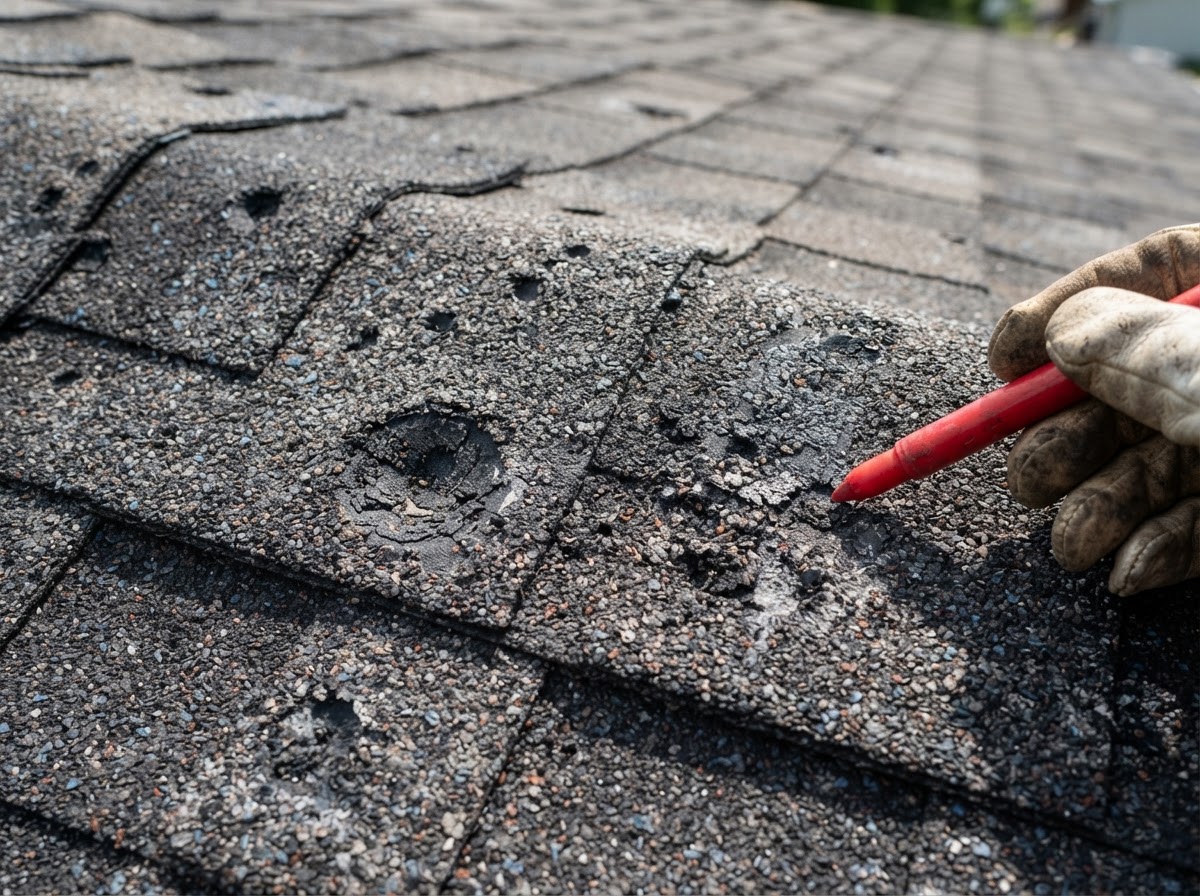
After any severe weather event, Kingston Springs homeowners should perform a careful visual inspection from the ground. Remember that many forms of storm damage, especially hail bruising and wind-lifted shingles, are not visible from the ground and require a professional inspection to identify.
What to Look for From the Ground
- Shingle pieces in the yard: Wind can tear shingles off and deposit them dozens of feet from your home.
- Excessive granules in gutters: Hail impact knocks the protective granules off asphalt shingles. If your gutters look like they are full of sand, your shingles may have been damaged.
- Dented metal flashing or vents: Hail leaves visible dents on soft metals like vent pipes, flashing, and gutters. This is one of the most reliable indicators of hail impact.
- Lifted or curling shingles: High winds break the sealant bond between shingles. Even if they have not blown off, lifted shingles will allow water underneath during the next rain.
- Tree limbs on or near the roof: Impact from falling branches can crack shingles and dent roof decking.
- Water stains on ceilings: The most obvious sign that water has already penetrated your roof system.
Worth Roofing Pro Tip
Insurance adjusters inspect dozens of roofs after major storms. Having your own detailed inspection report with photographs, completed before your adjuster arrives, can help ensure that nothing important is overlooked. Adjusters are trained to look for specific damage patterns, and having documentation that matches their criteria strengthens your claim significantly.
What We Recommend After Every Kingston Springs Storm
Follow this simple checklist after every severe weather event. If you discover active leaks or structural damage during your walkthrough, Worth Roofing Company provides emergency roofing services to tarp and secure your home immediately, preventing further water intrusion while you begin the insurance claim process.
- Walk around your home from the ground. Look for shingle pieces, broken branches, and debris.
- Look for dents on metal surfaces. Check gutters, vents, and flashing for hail impact marks.
- Check gutters for excessive granules. A sandy buildup means shingles are losing their protective coating.
- Inspect ceilings inside your home. Look for water stains, especially in corners and around chimneys.
- Take photos of everything you find. Documentation is the foundation of a strong insurance claim.
- Schedule a professional inspection. Even if you see no visible damage, hidden damage is common in wooded areas like Kingston Springs.
Understanding Your Insurance Policy Before Filing a Claim
Before you contact your insurance company, it is important to understand the key terms that will determine how your claim is handled and how much you will receive. Many Kingston Springs homeowners are surprised by how their policy works after storm damage.
Insurance Terms Explained
Deductible
The amount you pay out of pocket before your insurance company covers the rest. In Tennessee, wind and hail deductibles are often a percentage of your home's insured value (typically 1% to 2%), not a flat dollar amount.
Actual Cash Value (ACV)
Pays the current depreciated value of your roof. A 15-year-old roof on an ACV policy may only receive 40% to 50% of replacement cost, leaving a significant out-of-pocket gap.
Replacement Cost Value (RCV)
Pays the full cost to replace your roof with a new one, minus your deductible. This is the better coverage, but the insurance company holds back a portion (recoverable depreciation) until the work is actually completed.
Depreciation
The amount your insurance company deducts for the age and wear of your roof. On an RCV policy, this money is typically paid back to you after your roof is replaced.
Supplement
A request for additional payment when the actual cost of repairs exceeds the adjuster's original estimate. A reputable contractor will file supplements on your behalf when hidden damage is discovered during the repair process.
Adjuster
The insurance company's representative who inspects your roof and determines the scope and value of the damage.
Scope of Loss
The detailed document from your adjuster listing exactly what damage was found and what the insurance company will pay to repair or replace.
Step-by-Step: Filing a Roof Insurance Claim in Kingston Springs
Step 1: Document Everything Before You Call
Before contacting your insurance company, photograph every sign of damage you can find. Take wide shots of your roof from multiple angles, close-ups of damaged shingles, dents on metal surfaces, granules in your gutters, and any interior water stains. If tree limbs fell on your roof, photograph them in place before they are removed. This documentation is the foundation of your entire claim.
Step 2: Schedule a Professional Roof Inspection
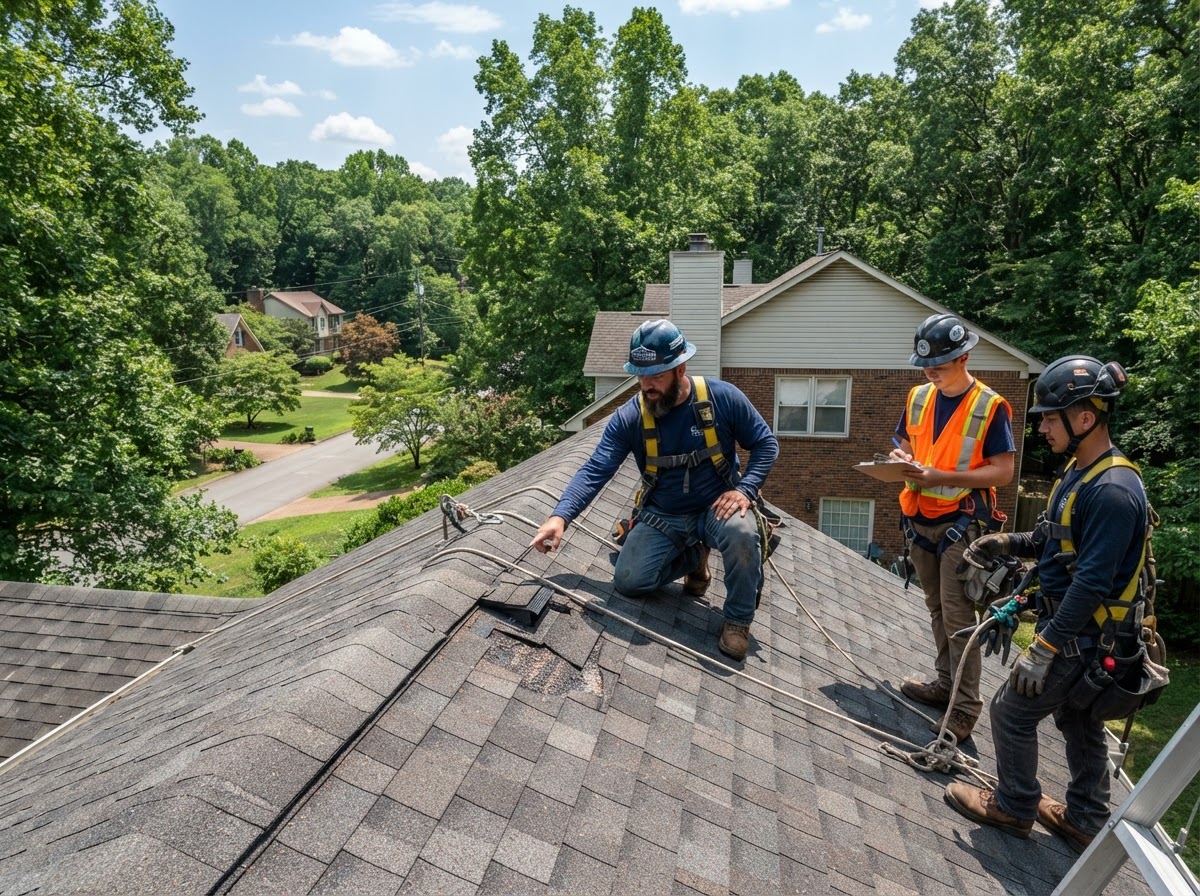
Having an independent inspection completed before your adjuster arrives is one of the most important steps you can take. A licensed local roofing contractor will document damage with high-resolution photos and provide a detailed report that you can share with your insurance company. This ensures that hidden damage, which an adjuster might miss during a quick visit, is properly documented. Schedule a free roof inspection with our team to get this process started.
Step 3: Review Your Policy and Deductible
Before filing, understand what your deductible is and whether your policy pays Actual Cash Value or Replacement Cost Value. If your deductible is high and the damage is minor, filing a claim may not make financial sense. A zero-payout claim may remain on your CLUE report and could be considered by insurers when evaluating future policies or renewals. We can help you understand whether filing a claim is the right decision for your situation.
Step 4: File the Claim and Work With Your Adjuster
Once you have your documentation and inspection report, contact your insurance company to file the claim. Your adjuster will schedule a visit to inspect the damage. We recommend having your roofing contractor present during the adjuster's visit to ensure all damage is identified and properly documented. This is not adversarial—it simply ensures that the adjuster sees everything we see.
Step 5: Complete the Repairs or Replacement
Once your claim is approved, schedule your roof replacement or roof repair as soon as possible. If your policy is RCV, your insurance company will hold back the recoverable depreciation until the work is complete. Once we finish the installation and provide final documentation, that remaining amount is typically released to you.
Critical Warning
Waiting until water appears inside the home is one of the most expensive mistakes homeowners make. Hidden storm damage often exists for months before leaks become visible. By the time you see a ceiling stain, water has likely already compromised your roof decking, insulation, and possibly structural components. Schedule an inspection after every storm, even if your roof looks fine from the ground.
Estimated Timelines for the Claims Process
Kingston Springs homeowners often ask how long the insurance claims process takes. While every claim is different, here are typical timelines based on our experience working with Middle Tennessee insurance companies:
| Step | Typical Timeline |
|---|---|
| Professional roof inspection | 30 to 90 minutes |
| Insurance company response | 24 to 72 hours (varies by company) |
| Adjuster visit | Typically within several days of filing |
| Claim approval and first payment | Usually within 1 to 2 weeks after adjuster visit |
| Roof replacement | Usually 1 to 2 days once materials are available |
Common Mistakes That Hurt Your Claim
Over our 40+ years serving Middle Tennessee, we have seen homeowners make the same mistakes repeatedly. Avoiding these can mean the difference between a full roof replacement and a denied claim:
- Calling insurance before getting an inspection: If your adjuster visits before you have documentation, you are at their mercy. Get an independent inspection first.
- Signing with the first contractor who knocks on your door: After major storms, out-of-state "storm chasers" flood affected areas. They often cut corners, use inferior materials, and disappear when warranty issues arise. Always verify that your contractor is licensed in Tennessee and has a local address.
- Working with a contractor who offers to waive your deductible: This is illegal in Tennessee. A contractor willing to break the law on your deductible is likely cutting corners elsewhere on your roof.
- Waiting too long to file: Most policies require filing within one year of the date of loss, though the exact deadline varies by policy. The longer you wait, the harder it is to prove the damage was caused by a specific storm.
- Not documenting temporary repairs: If you need emergency tarping to prevent further damage, photograph everything before and after the tarp is installed, and keep all receipts. Your insurance company needs this documentation.
Choosing the Right Roofing Contractor in Kingston Springs
Kingston Springs is a small community, and homeowners here deserve a contractor who understands the specific challenges of living along the Harpeth River. Worth Roofing Company is based in Franklin, just a short drive from Kingston Springs, and we have served Cheatham County and the surrounding area for over 40 years.
When choosing a contractor after storm damage, look for:
- A local address and local references: If a contractor cannot show you a local office, they are likely a storm chaser who will be gone before your warranty expires.
- Proper licensing: In Tennessee, if your roof claim is $25,000 or more, your roofer must hold a General Contractor license. Always verify this.
- Insurance and bonding: A reputable contractor carries liability insurance and workers' compensation coverage to protect you and your property.
- Experience with insurance claims: Your contractor should be able to file supplements, meet with adjusters, and navigate the claims process on your behalf. We do this for every storm damage client.
- Manufacturer certifications: We are certified installers for premium materials from GAF, Owens Corning, and CertainTeed, which means your manufacturer warranty is fully valid.
A Common Situation We See in Kingston Springs
One common situation we see involves homeowners calling after finding a few shingles in the yard following a spring storm. Their roof does not appear to be leaking, so they assume everything is fine. During our inspection, we often discover lifted shingles across multiple roof slopes that cannot be seen from the ground. The sealant bond has been broken by high winds, and while the shingles have not blown off yet, water is already finding its way underneath during the next rainfall.
Because this damage is documented before the homeowner files a claim, the adjuster has the evidence needed to approve a full roof replacement rather than a partial repair. This is why scheduling an inspection immediately after a storm, even when everything looks fine from the ground, is so important for Kingston Springs homeowners.
How to Protect Your Kingston Springs Roof Before the Next Storm
While you cannot control the weather, you can take proactive steps to reduce the risk of storm damage to your Kingston Springs home:
- Keep tree limbs trimmed back: Maintain at least 6 to 10 feet of clearance between branches and your roof surface. This prevents scraping damage and reduces the risk of branch impact during high winds.
- Clean your gutters regularly: Kingston Springs' heavy tree canopy means gutters fill quickly with leaves and debris. Clogged gutters trap water, which can back up under your shingles and cause leaks.
- Schedule annual roof inspections: A professional inspection catches small issues before they become major problems. We recommend annual inspections for all Kingston Springs homes, especially those surrounded by mature trees.
- Check your attic ventilation: The humid environment along the Harpeth River makes proper ventilation critical. Without it, moisture becomes trapped in your attic, leading to wood rot, mold, and premature shingle failure.
- Consider impact-resistant shingles: If you are planning a roof replacement, Class 4 impact-resistant shingles offer the highest rating for hail resistance and may qualify you for insurance discounts.
- Review your insurance policy annually: Make sure you understand your deductible and whether your policy pays ACV or RCV before you need to file a claim.
Related Reading & Resources
Frequently Asked Questions
Protect Your Kingston Springs Home Before Small Problems Become Expensive Repairs
Storm damage is not always obvious. The sooner it is identified, the more options homeowners typically have for repairs or insurance claims. A professional inspection can help determine the extent of any damage and provide the documentation needed before contacting your insurance company. Do not guess whether your roof has storm damage—schedule a free, no-obligation inspection with Worth Roofing Company. We will document any damage, explain your options, and help you determine whether filing an insurance claim makes sense—before you contact your insurance company.

Reviewed & Written By
Terry
Owner, Worth Roofing Company
Terry brings over four decades of hands-on roofing expertise to Middle Tennessee homeowners. As the owner of Worth Roofing Company, Terry is passionate about educating the community on proper roof maintenance, storm damage mitigation, and navigating the insurance claims process to ensure every home is protected. He has personally overseen thousands of residential roof repairs, replacements, and emergency responses across Franklin, Fairview, Kingston Springs, Bellevue, Burns, Dickson, and Pegram.
Sources & References
This article is supported by the following authoritative sources. We encourage you to verify information directly from these references.